

How much are the financial decisions you don’t understand already costing you?
Want to get your finances under control before you even buy the book?
Get the free Personal Financial Dashboard & 30-Day Money Reset Checklist, plus updates when Understanding Money is released.
Your paycheck arrives. Bills get paid. A credit card offer shows up. A lender quotes a monthly payment. Your credit score moves for reasons you don’t understand. Someone tells you that you should be saving more, investing more, paying down debt, or building an emergency fund.
But almost nobody ever sits down and explains how all of those pieces fit together.
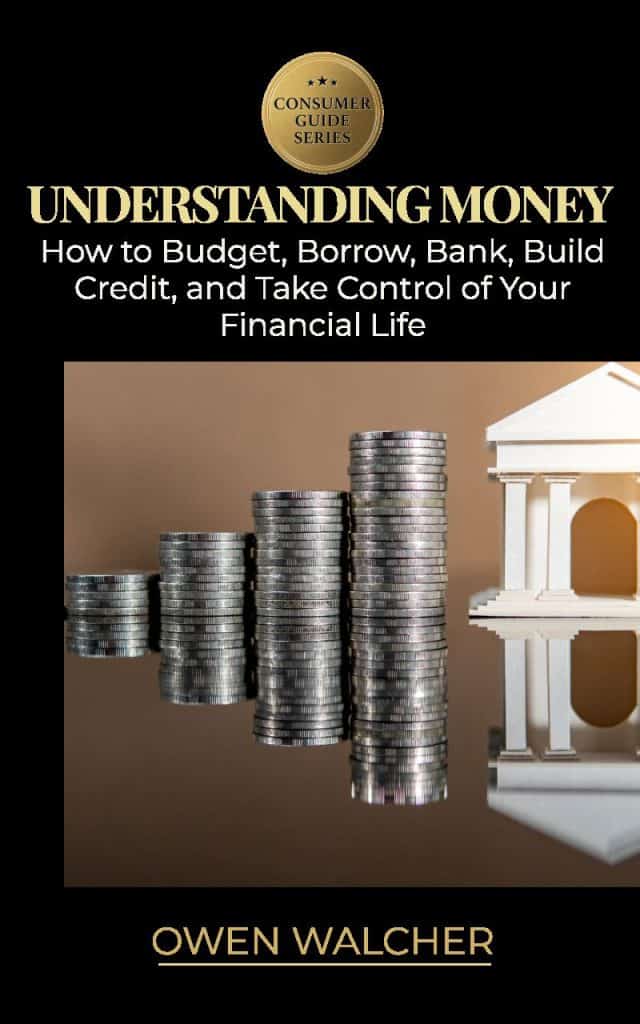
That’s the problem Understanding Money was written to solve.
Most people aren’t bad with money. They were simply never taught the system. And when you don’t understand the system, it is easy to overpay, overborrow, miss hidden fees, choose the wrong payment method, carry expensive debt, or make a major financial decision based on the monthly payment instead of what it will actually cost you.
The book starts from a simple premise: money is a system, and a system can be learned.
What this book will help you do
Understanding Money gives you a working model of your financial life rather than a collection of disconnected money tips.
You’ll learn how to see what you own, what you owe, what comes in, and where it goes. You’ll learn how to build a budget that accounts for real life, including the irregular expenses that wreck many otherwise-good budgets. You’ll understand credit reports and credit scores, how loans really work, why APR matters, how credit-card traps develop, and how to compare borrowing decisions before signing.
The book also walks through debt repayment, saving, taxes, major purchases, fraud protection, managing money with other people, and deciding when you actually need professional help.
And it ends by turning all of that knowledge into a five-stage financial roadmap: Stabilize, Protect, Repair, Build, and Plan.
Where should you start?
If you’re wondering where all your money goes: Start with Chapters 1–3. Build a complete picture of your finances, create a realistic budget, identify weak points, and establish financial stability.
If your credit score is confusing you: Go to Chapter 6. Learn the difference between a credit report and a credit score, what actually affects your score, and how to build or repair credit.
If you’re about to borrow money: Read Chapter 7 before signing anything. Learn the difference between interest rate and APR, understand amortization, and see why focusing only on the monthly payment can be expensive.
If credit cards are becoming a problem: Chapters 8 and 9 explain how cards work, how minimum payments and interest compound, and how to build a practical debt-repayment strategy.
If you’re finally able to save: Chapter 10 helps you match savings to your goals and understand when long-term money needs to move beyond cash.
If you’re making a major purchase: Chapter 12 focuses on affordability, total cost of ownership, financing, add-ons, subscriptions, and the pressure tactics that can distort good decisions.
If you’re worried about fraud or identity theft: Chapter 13 shows you how scammers get access, how to build defenses, and what to do immediately if something goes wrong.
If you’re trying to get your whole financial life under control: Go directly to Chapter 16 and begin the 30-day financial reset and one-year roadmap.
More than a book to read
Understanding Money includes practical tools readers can actually use, including:
- Personal Financial Inventory and Net-Worth Worksheet
- Monthly Cash-Flow Plan and Irregular-Expense Calendar
- Emergency-Readiness Checklist
- Payment-Method Decision Chart
- Credit-Report Review and Dispute Workflow
- Loan-Comparison Worksheet
- Credit-Card Offer Comparison Chart
- Debt Action Plan and Creditor Call Script
- Goal-Prioritization Worksheet
- Tax-Document Checklist
- Major-Purchase Due-Diligence Checklist
- Fraud-Response Checklist
- Questions to Ask a Financial Professional
Questions Understanding Money answers
How do I make a budget that I can actually stick to?
The book explains several approaches to budgeting and, importantly, how to account for irregular expenses and changing income. A good budget isn’t just a list of monthly bills. It needs to reflect what actually happens throughout the year.
What’s the difference between a credit report and a credit score?
They’re related, but they aren’t the same thing. Your credit report contains information about your credit history; scoring models use information from that history to calculate credit scores. Chapter 6 explains both and shows you how to review and protect your credit.
How can I improve my credit score?
There is no instant fix. The book explains the factors that influence credit, why paying on time matters so much, how balances and applications affect you, and how to identify and dispute errors on your reports.
What is APR, and how is it different from the interest rate?
The interest rate tells you part of the borrowing cost. APR is designed to make more of the cost of credit visible. Chapter 7 shows you how to compare loans instead of judging them solely by their monthly payments.
How do I know if I can really afford a loan?
Loan approval and affordability are not the same thing. The book teaches you to look at the entire obligation, including the total amount repaid, fees, interest, your existing commitments, and what happens to your monthly cash flow.
Should I pay off debt or save money first?
There isn’t one answer for every situation. The book introduces an order of operations that protects you from the next emergency while also attacking expensive debt, rather than treating saving and debt repayment as unrelated decisions.
What is the debt snowball versus the debt avalanche?
Both are structured approaches to paying down multiple debts. One emphasizes mathematical cost; the other emphasizes psychological momentum. The book explains both so you can choose an approach you are likely to maintain.
How much emergency savings do I need?
Rather than treating an emergency fund as one magic number, the book distinguishes between getting an initial reserve in place and gradually building greater protection based on your own expenses and risks.
Should I use a debit card or credit card for purchases?
It depends on the transaction. One important concept in the book is reversibility: how easily you can recover money when something goes wrong. Different payment methods expose your own cash and offer different dispute protections.
How can I tell whether a financial adviser is really acting in my best interest?
Chapter 15 explains fiduciary duty, compensation, conflicts of interest, credentials, and the questions to ask before trusting someone with an important financial decision. One particularly useful question is whether the adviser will act as a fiduciary in writing, at all times.
What should I do if I think my identity or financial accounts have been compromised?
The book explains preventive protections as well as immediate response and recovery steps, and points readers toward official resources when current procedures or rules need to be verified.
Where do I start if my finances feel completely out of control?
Start by seeing the whole picture. The final chapter reduces the book to five stages: Stabilize, Protect, Repair, Build, Plan, followed by a 30-day reset and a one-year roadmap.
Why Understanding Money is different
It doesn’t sell you a financial philosophy. The goal isn’t to tell you which bank, card, lender, or adviser to choose. It teaches you how to evaluate them.
It explains the system behind the advice. Instead of simply saying “build credit” or “make a budget,” it explains why these things work and how one decision affects another.
It focuses on consumer traps. Monthly-payment selling, credit-card minimums, payment methods that can’t easily be reversed, forgotten subscriptions, conflicts of interest, fake checks, and other costly mistakes are treated as part of financial education, not side issues.
It gives you tools, not just information. Worksheets, checklists, comparison tools, action plans, scenarios, and a 30-day reset turn the information into something you can use.
And it knows what a printed book can’t know forever. Rates, limits, deadlines, state laws, and other changing information are deliberately flagged for verification rather than presented as permanent facts.
You don’t have to become a financial expert. You just need to understand enough to recognize the choice in front of you, know what it really costs, and ask the right questions before you act.
Learn how money really works.
Understanding Money: How to Budget, Borrow, Bank, Build Credit, and Take Control of Your Financial Life.
[Learn More / Buy the Book]